Doha Grand Terminal Aquarium: invisible technology and advanced solutions by FIP and Lareter
Project: Cruise Terminal Aquarium
Location: Old Doha Port, Qatar
Products: Valves FIP - Fittings FIP - Pipes LARETER
Year: 2024
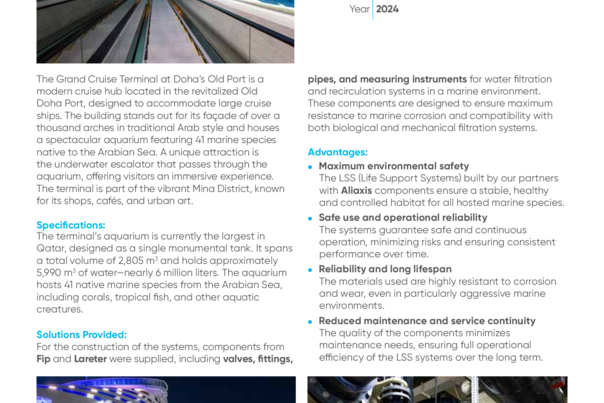
The Grand Cruise Terminal at Doha’s Old Port is a modern cruise hub located in the revitalized Old Doha Port, designed to accommodate large cruise ships. The building stands out for its façade of over a thousand arches in traditional Arab style and houses a spectacular aquarium featuring 41 marine species native to the Arabian Sea. A unique attraction is the underwater escalator that passes through the aquarium, offering visitors an immersive experience.
The terminal is part of the vibrant Mina District, known for its shops, cafés, and urban art.
Specifications:
The terminal’s aquarium is currently the largest in Qatar, designed as a single monumental tank. It spans a total volume of 2,805 m3 and holds approximately 5,990 m3 of water—nearly 6 million liters. The aquarium hosts 41 native marine species from the Arabian Sea, including corals, tropical fish, and other aquatic creatures.
Solutions Provided:
For the construction of the systems, components from Fip and Lareter were supplied, including valves, fittings, pipes, and measuring instruments for water filtration and recirculation systems in a marine environment. These components are designed to ensure maximum resistance to marine corrosion and compatibility with both biological and mechanical filtration systems.
Advantages
- Maximum environmental safety
- The LSS (Life Support Systems) built by our partners with Aliaxis components ensure a stable, healthy and controlled habitat for all hosted marine species.
- Safe use and operational reliability
The systems guarantee safe and continuous operation, minimizing risks and ensuring consistent performance over time. - Reliability and long lifespan
The materials used are highly resistant to corrosion and wear, even in particularly aggressive marine environments. - Reduced maintenance and service continuity
The quality of the components minimizes maintenance needs, ensuring full operational efficiency of the LSS systems over the long term.
Downloads